If you have handled a carbon fibre part before, you probably remember a weave. A tight checkerboard, or a diagonal twill, repeating evenly across the surface. That pattern is woven cloth — a fabric laid into a mould, layer by layer, and cured. It is what most people mean when they say carbon fibre.
Forged carbon is a different material that happens to share a name.
What forged carbon actually is
Instead of cloth, we start with short strands of fibre. They are prepared, charged into a tool, and pressed under heat and pressure until they lock together into a solid block. There is no warp and weft, no repeat, and no direction the material has to respect. What comes out is a dense solid with a pattern that formed while it was being made — not one that was designed in advance.
Why the difference shows up later
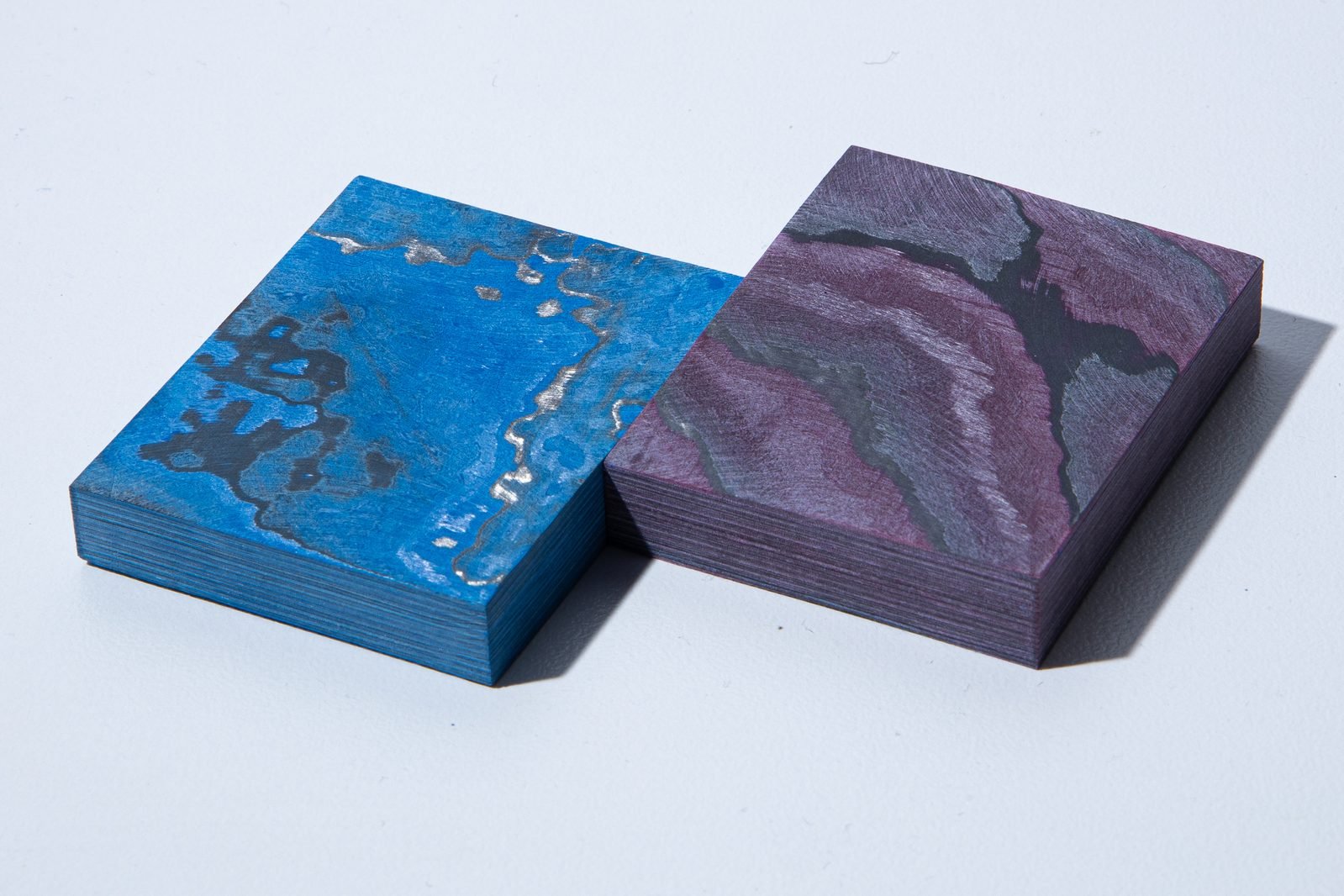
Because there is no weave, there is no pattern to align and no direction to worry about when you cut. A part machined from a forged block looks consistent from every edge, and the surface does not change character as you move across it. For small precision parts — a case, a frame, a handle — that removes a whole category of decisions.
Where you have seen it
Forged carbon turned up first in places where weight and exclusivity were both worth paying for: high-end watchmaking, eyewear, and small runs of hardware where the pattern itself was part of the appeal. It has since moved into anything where someone wants the look of composite without the look of fabric.
What it is not
It is not a printed pattern, and it is not a surface film. The grain runs through the block. Cutting, sanding, and polishing do not remove it — they only change how much of it you see. That is why a raw sawn face and a finished face of the same block look related but not identical.
If you want to work with it
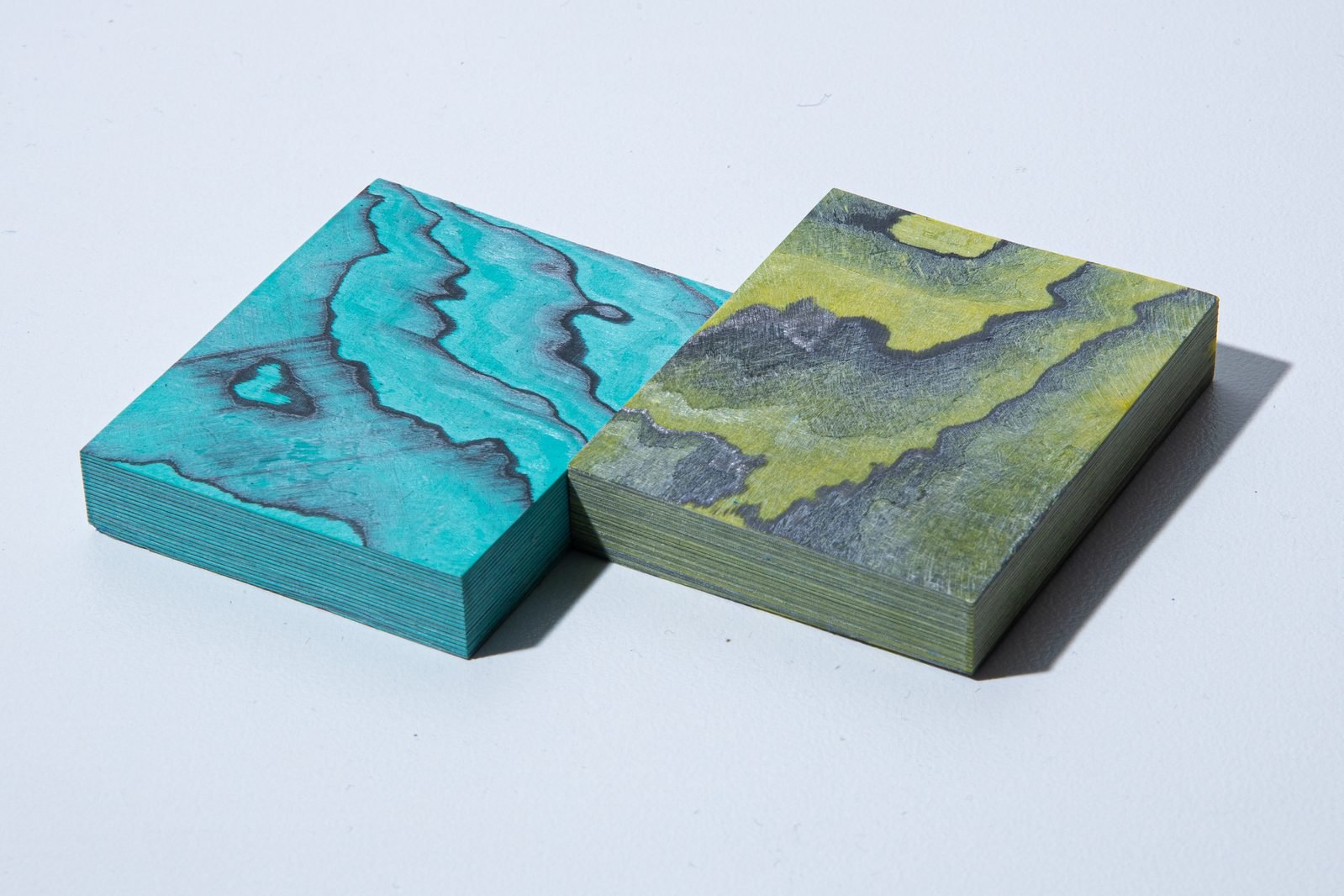
We sell the material by the sheet, in ten colours and three thicknesses, for people who machine their own parts. Browse forged carbon sheets, or send us a drawing if you would rather we made the part.