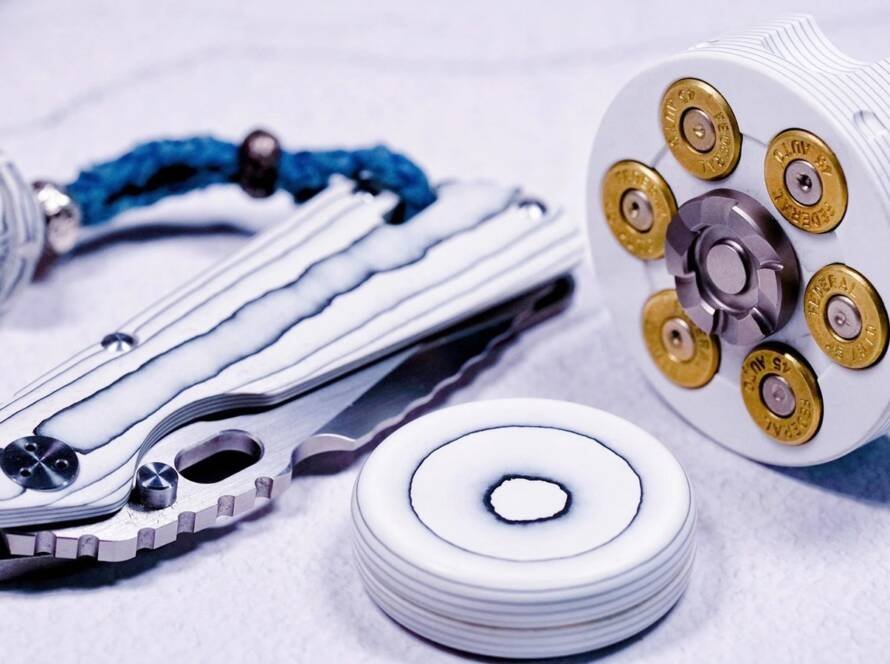
Ten colours, three thicknesses. Here is how to pick the right one before you order.
Start from the part, not the sheet
Work out the largest dimension of what you are making, then add what you will lose to cutting and finishing. Sheets are easier to specify once you know the finished size — the other way round tends to end in a second order.
Thickness
We press sheets in three thicknesses. Thinner stock suits flat or lightly shaped work — panels, inlays, covers — where you are not asking the material to carry a load across its section. Thicker stock gives you more to machine into: deeper profiles, parts with a shoulder, anything where the edge itself is a visible surface.
If you are unsure, describe the part when you order and we will tell you which one we would use.
Colour
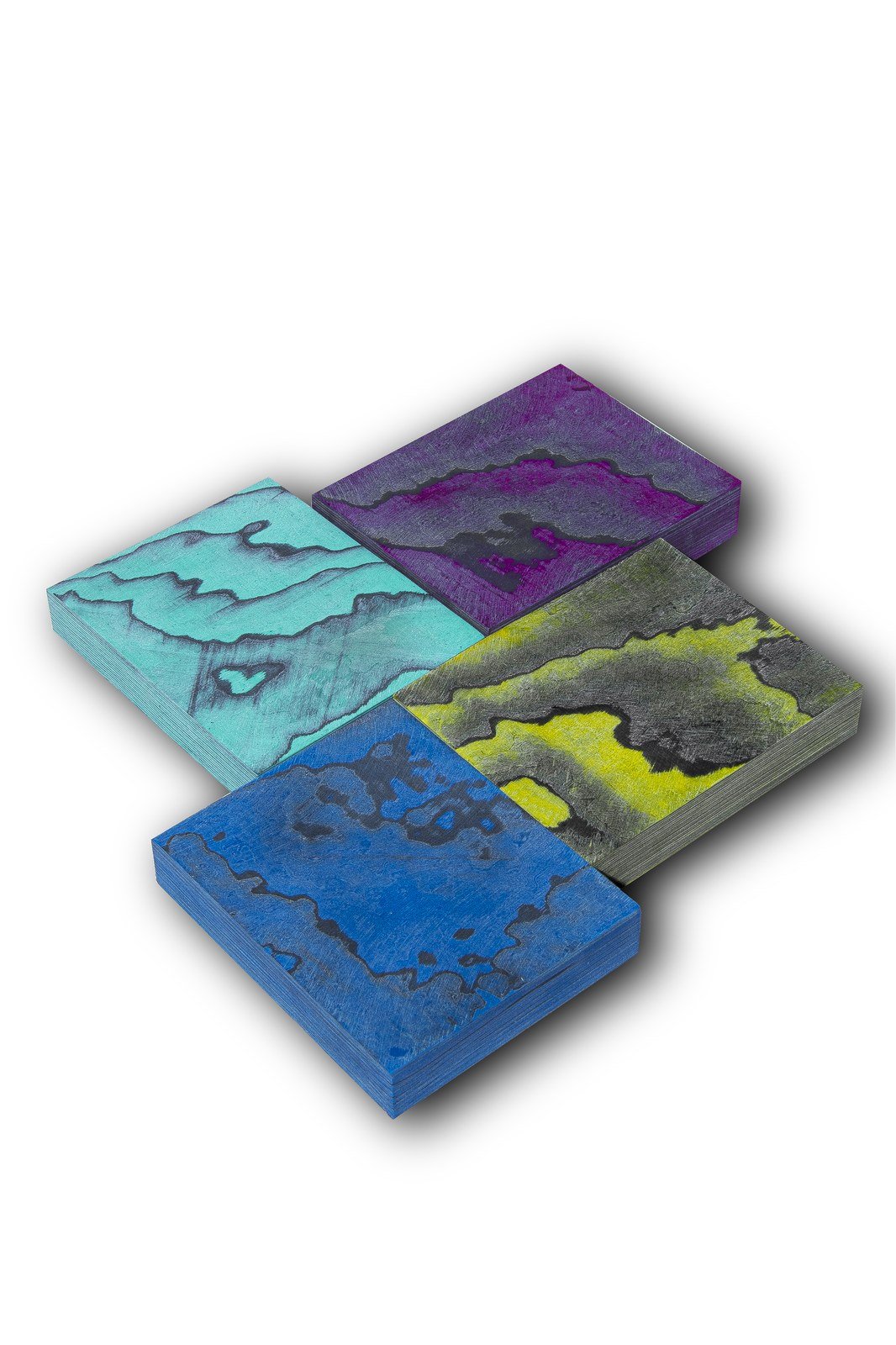
There are ten standard colours, all pressed from the same base material. Because the colour is part of the block, it does not sit on the surface waiting to be scratched off — it runs through the section, so an edge looks like the face.
If you need a tone we do not stock, ask. Colour matching for a specific project is something we do case by case.
Finish
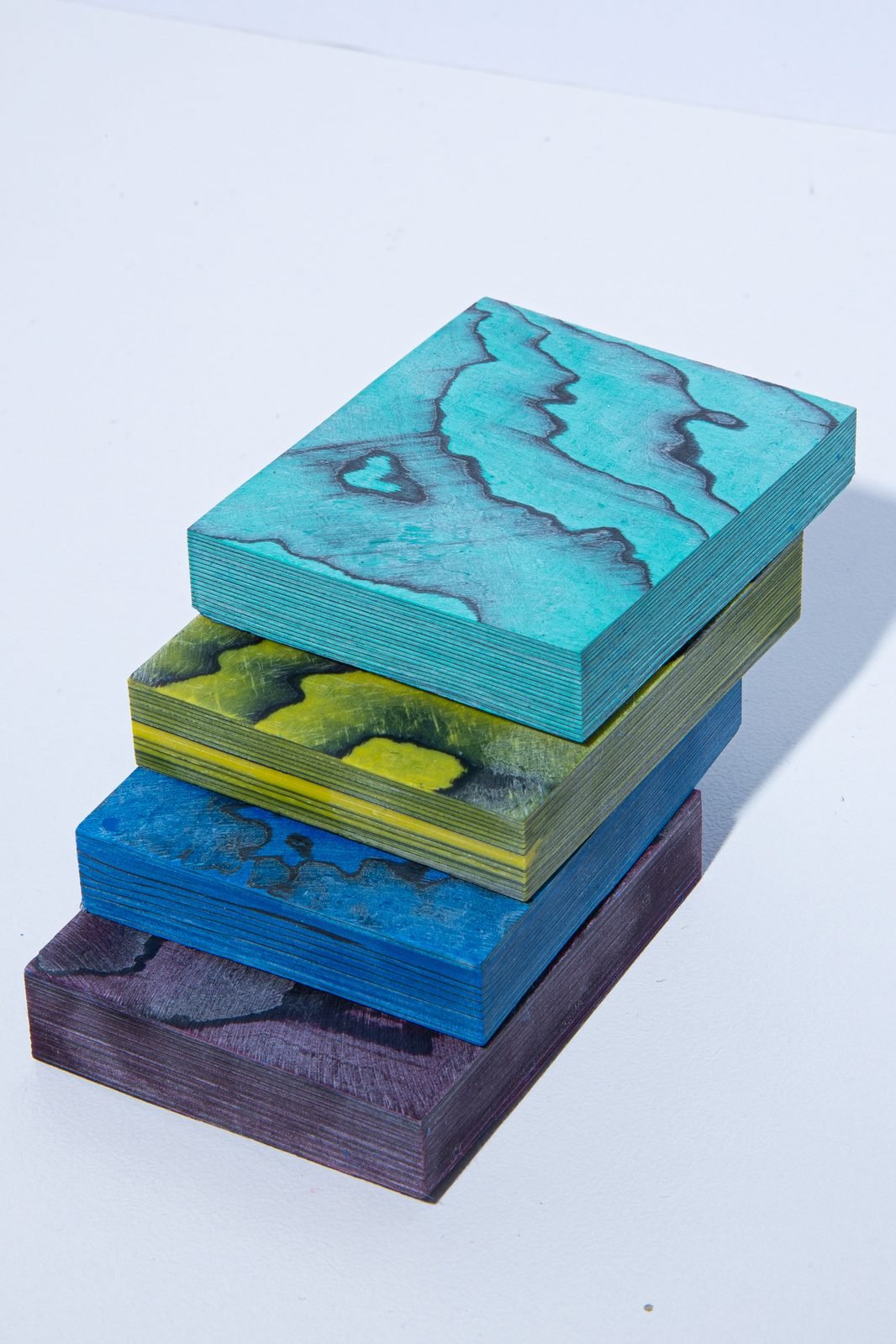
The grain is already in the material; finishing decides how much of it you see. A sheet can be left as it comes from the machine, or taken up through sanding and polishing to a gloss. If you want us to finish it for you, say so at the order stage rather than after.
What to tell us when you order
Colour, thickness, and quantity — plus two things people often forget: whether the parts need to match each other, and what you intend to finish the surface to. Both affect how we cut the block.
Choose a sheet, or ask us first if the part is unusual.